In a week in which leading scientists in the US have concluded that global warming is ‘irreversible’, it is no overstatement to say that the solar foil research presently being conducted by TU Delft’s Dr Miro Zeman is vital for our planet’s future sustainability.
Share
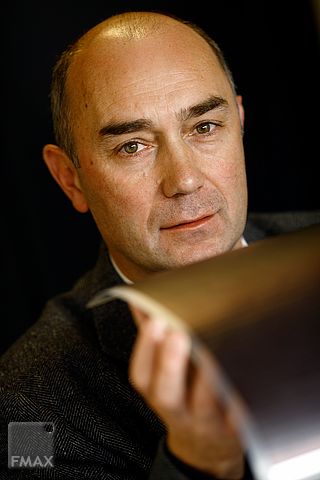
Dr Zeman is developing a solar foil technology that he hopes will enable sustainable electricity production on virtually every rooftop around the world.
“Curiosity and the urge to work on a revolutionary technology,” are the reasons that Dr Miro Zeman, head of the Solar Group at ECTM Electronic Components, Technology and Materials department, gives for his lifetime dedication to the development of solar energy. Zeman, a Slovakian national, came to TU Delft in 1989 to conduct research on a then up-coming material for solar energy, called amorphous silicon.
Fast forward to 2009 and a time when many European citizens are look inward, as demonstrated by the Dutch and French voting no to a European constitution, Zeman, who experienced the Cold War, is living proof that European Union has brought many advantages that are perhaps now already taken for granted.
“In those days, you couldn’t even easily go to Vienna, which is just 50 km from Bratislava, the capital of Slovakia,” he recalls from is office in the Dimes building. Standing up from his desk, he shows his visitor a thin flexible foil in which amorphous silicon solar cells are incorporated. It is a sample of a technology that could enable mass production of solar electricity through its integration in roofs and facades of buildings in virtually every corner of the world.
In 1989 you came to TU Delft to conduct research on amorphous silicon. Why?
“In the late 1970s, many people were interested in this up-coming material, amorphous silicon, and so were researchers at TU Delft. Researchers at Dundey University in England had provided scientific evidence that amorphous silicon could be doped, meaning that its electrical properties could be manipulated in such ways that it could be used for fabricating semiconductor devices such as solar cells. Because there were few people working on amorphous silicon and I had done my PhD on this material, TU Delft invited me to work on a six-month fellowship project. And I have stayed ever since. This project completely changed my life.”
Why did you decide to stay?
“The most important reason is that I knew that I could do better research in Delft than in Slovakia. Another reason was that I could also earn more at TU Delft. At that time the Czech Republic and Slovakia separated peacefully, but there was a lot of uncertainty.”
What makes amorphous silicon so interesting for the generation of solar power?
“The most important reason is that it can be deposited on an underlying or so-called substrate material by a silicon carrying gas, such as silane, and done so at a relatively low temperature. The industry standard (multi)-crystalline silicon is fabricated at temperatures of above 1400°C, while amorphous silicon can be deposited at 200°C. This makes cheaper production of solar cells possible, because less energy is needed and because you can use cheap substrate materials. The company Nuon-Helianthos has built a pilot-line for testing the thin-film solar cell foil, which we and various partners co-developed, and has also decided to build a factory for the production of the solar cell foil.” But its conversion efficiency of 6 percent is quite low compared to the industry standard of approximately 15 percent for multicrystalline solar cells.
“The material properties of amorphous silicon are indeed less compared to those of crystallized silicon. However, by stacking layers of materials with different physical properties the conversion efficiency of up to 10 percent and above can be reached. The issue here is all about making trade-offs. Currently, one of the main challenges in the solar energy industry is to find cheap production techniques. The production cost of the solar foil we developed is a fraction of standard photovoltaic solar panels. In laboratories, conversion efficiencies of 40 percent have been demonstrated. But reaching these values in the real world is something else. We obviously aim for the best of both worlds. But this is not an easy task. It takes a lot of effort and bright minds.”
In 2006 you co-founded the non-profit foundation Slovak Renewable Energy Agency (Skrea). What do you hope to achieve with this organization? “Sadly enough, many Slovakians currently don’t know anything about solar energy. The goal of my foundation is to educate people in Slovakia about solar energy by, for instance, organizing workshops and seminars. Another goal is to create support for the application of solar energy. One project we carried out last year was the called the ‘Sun into schools’ project, in which we installed a 20 kWh PV system in a secondary school in Bratislava and connected it to the grid. This was first-ever system connected to grid in Slovakia. I’m very pleased with our achievements thus far and that many people seem to appreciate our efforts.”
You’ve experienced the scientific worlds of both the Netherlands and Slovakia. How would you compare them?
“In the Netherlands the focus is much more on trying to unravel the core of scientific questions. In Slovakia, we’re more pragmatic, with the consequence being that research is more superficial. I’ve learned at TU Delft that it’s not only important to make something, it’s also important to understand why things work as they do. However, pragmatism is also important, especially for a technological university. Sometimes researchers focus merely on obtaining interesting research results and not on how society could benefit from their research. I hope my pragmatism helps find solutions to the challenges we face.”
You’re quite positive about the European integration process. Why?
“In the Cold War era Western Europe seemed a completely different, and maybe even a hostile world for many Czechoslovakians. Probably because the propaganda machines on both sides were working quite well. Europe’s integration process has created grounds for common understanding and cooperation. Now we’re working together on many issues for our common benefit. My presence here in Delft is a result of this integration process, and I hope I have also contributed to an understanding between Slovakian and Dutch people. You know, over the years I’ve developed a feeling of being a real European. I truly feel at home in both countries.”


Comments are closed.